Trusted Industrial Rigging Company in Akron, OH
Canal Crane and Hauling, LLC provides rigging services in Akron, OH for plant machinery, structural steel, tanks, and process equipment. We build the lift plan, rig each load so the hook sits over its center of gravity, and set it on its mark, inside a plant bay or from a city street.
We dispatch from our Rootstown yard on Tallmadge Road, about 25 minutes from the city’s west side. Our record includes 50+ rigging solutions delivered, 100+ crane jobs, and 200+ hauling projects, backed by a 5.0 rating across 10 Google reviews.
Rigging Services in Akron, OH: What Our Crew Handles
Rigging covers everything between the hook and the load: slings, shackles, spreader bars, the hitch, and the plan that keeps the load level. Our Akron crane service provides the crane and a certified operator, and our rigging crew connects that capacity to the load. The work falls into four main groups.
Machinery Rigging and Plant Equipment Moves
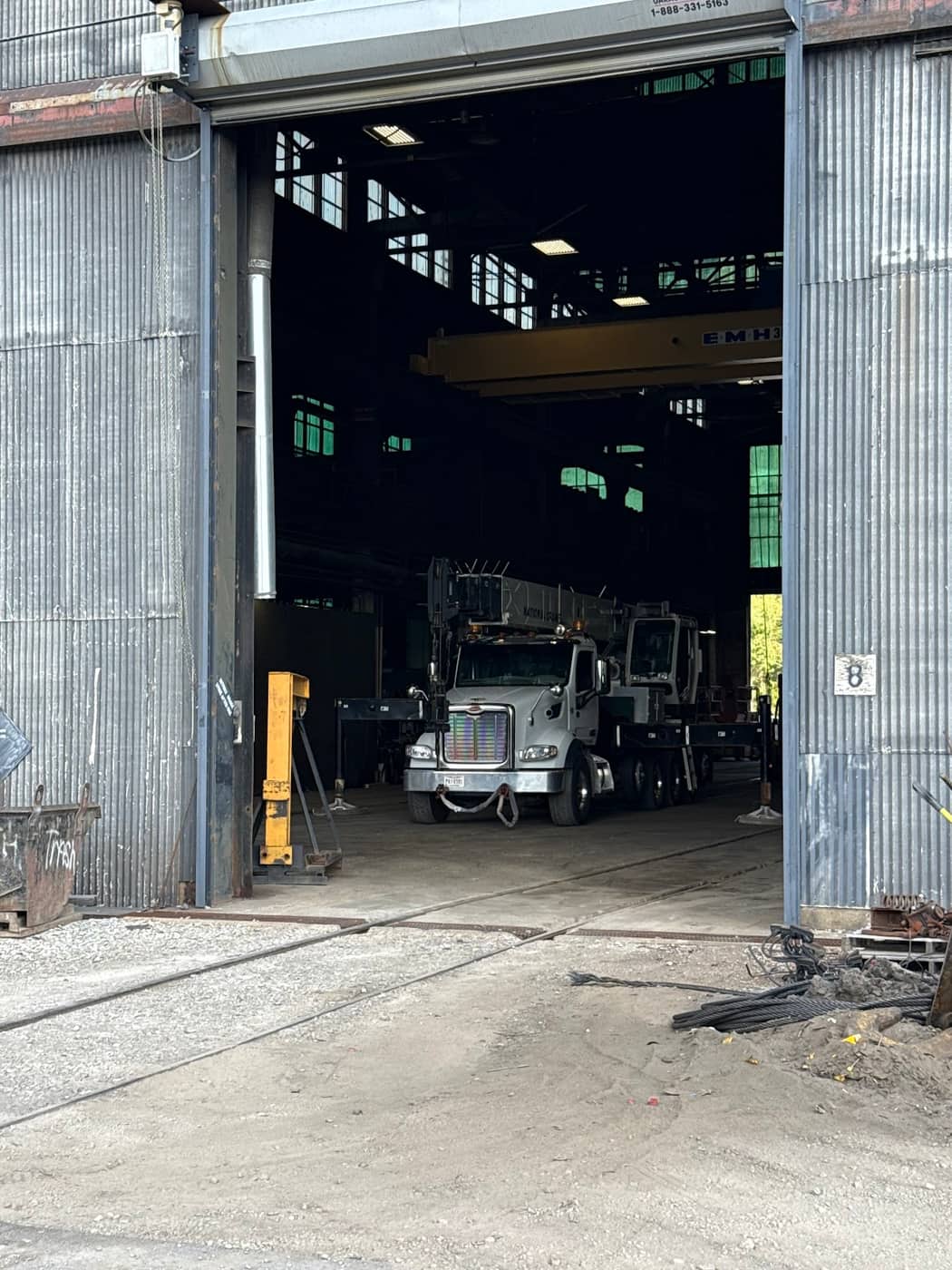
Presses, mixers, extruders, machine tools, and production-line equipment need a plan for every move between the truck and the foundation. Our crew rigs the load, sets it with the crane or a forklift, and hands off to our millwright team when the job calls for installation and alignment. The same heavy equipment rigging process applies across Northeast Ohio, and older Akron buildings add the checks covered below.

Structural Steel, Beams, and Truss Picks
Steel beams, fabricated assemblies, and roof trusses often ride on wire rope slings or alloy chain, with softeners at sharp edges. Our project photos show a steel beam rigged on a flatbed for a crane pick and a boom truck setting roof trusses on a Northeast Ohio job.
Tanks, Vessels, and Generators
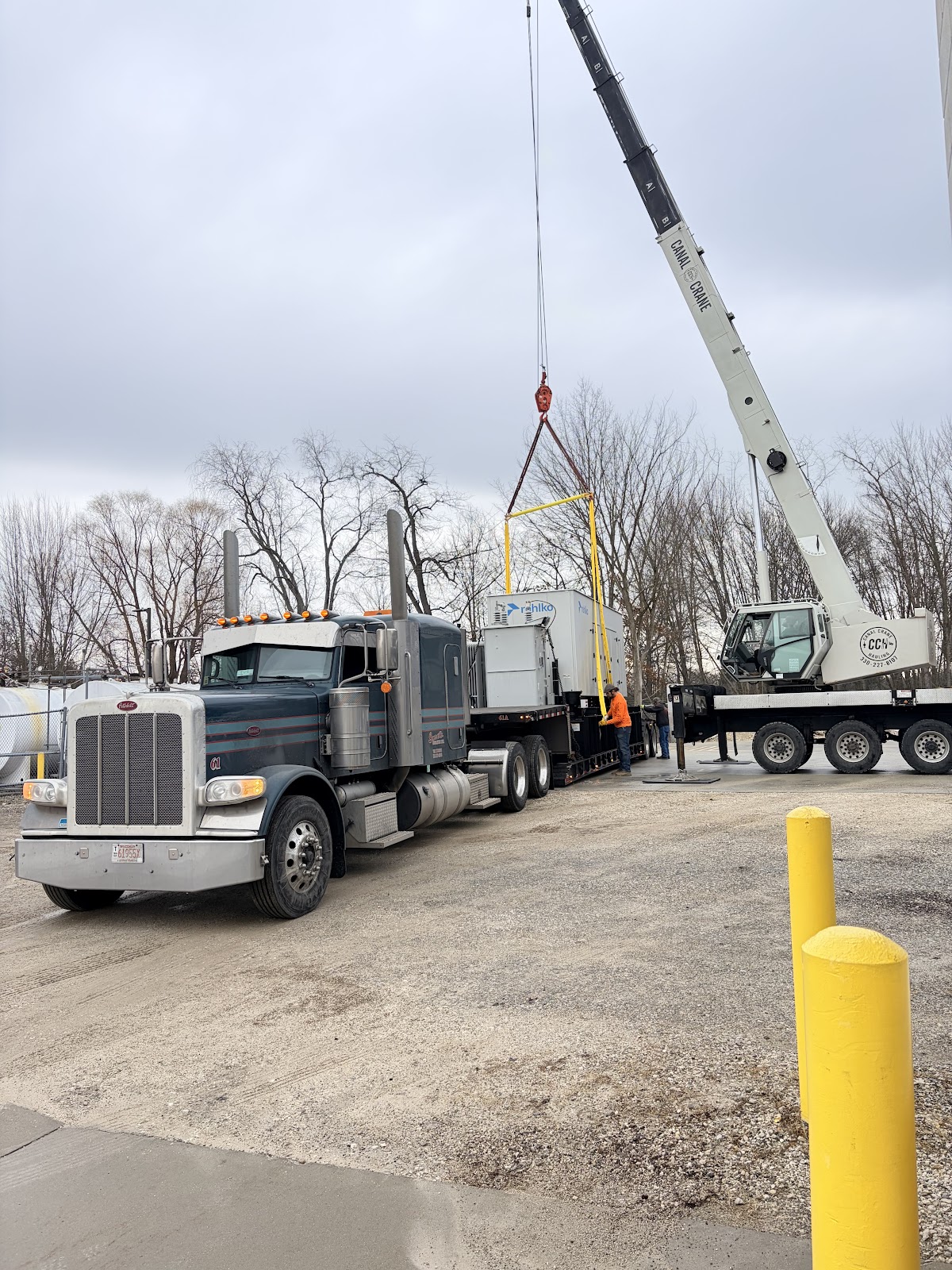
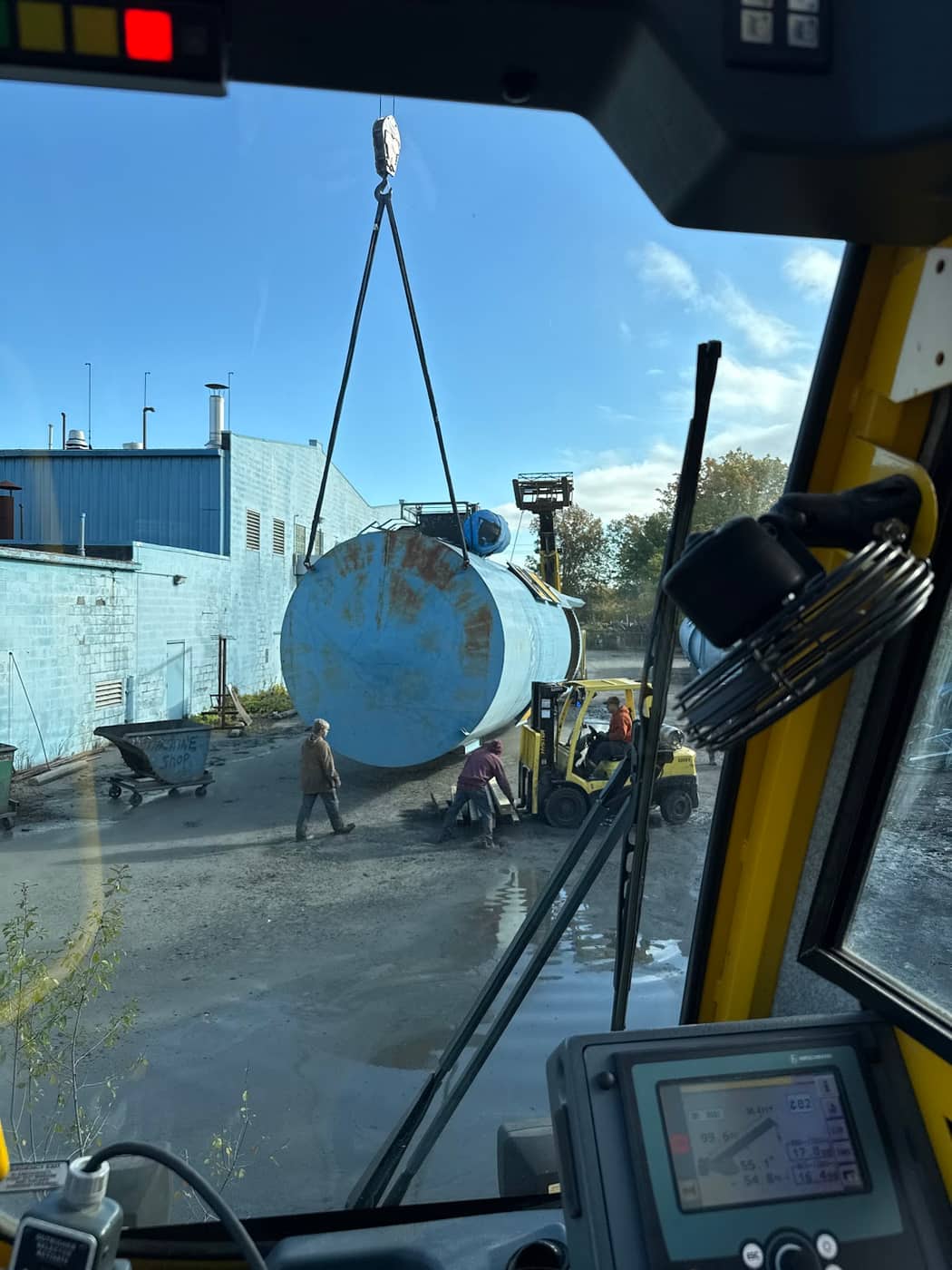
Tanks and vessels can have thin shells and off-center fittings, and some arrive without rated lugs. Rigging must protect the shell and control tilt throughout the lift. Our site photos include an industrial vessel set at a plant with a forklift and a crane lifting a generator.
Substation and Utility Lifts
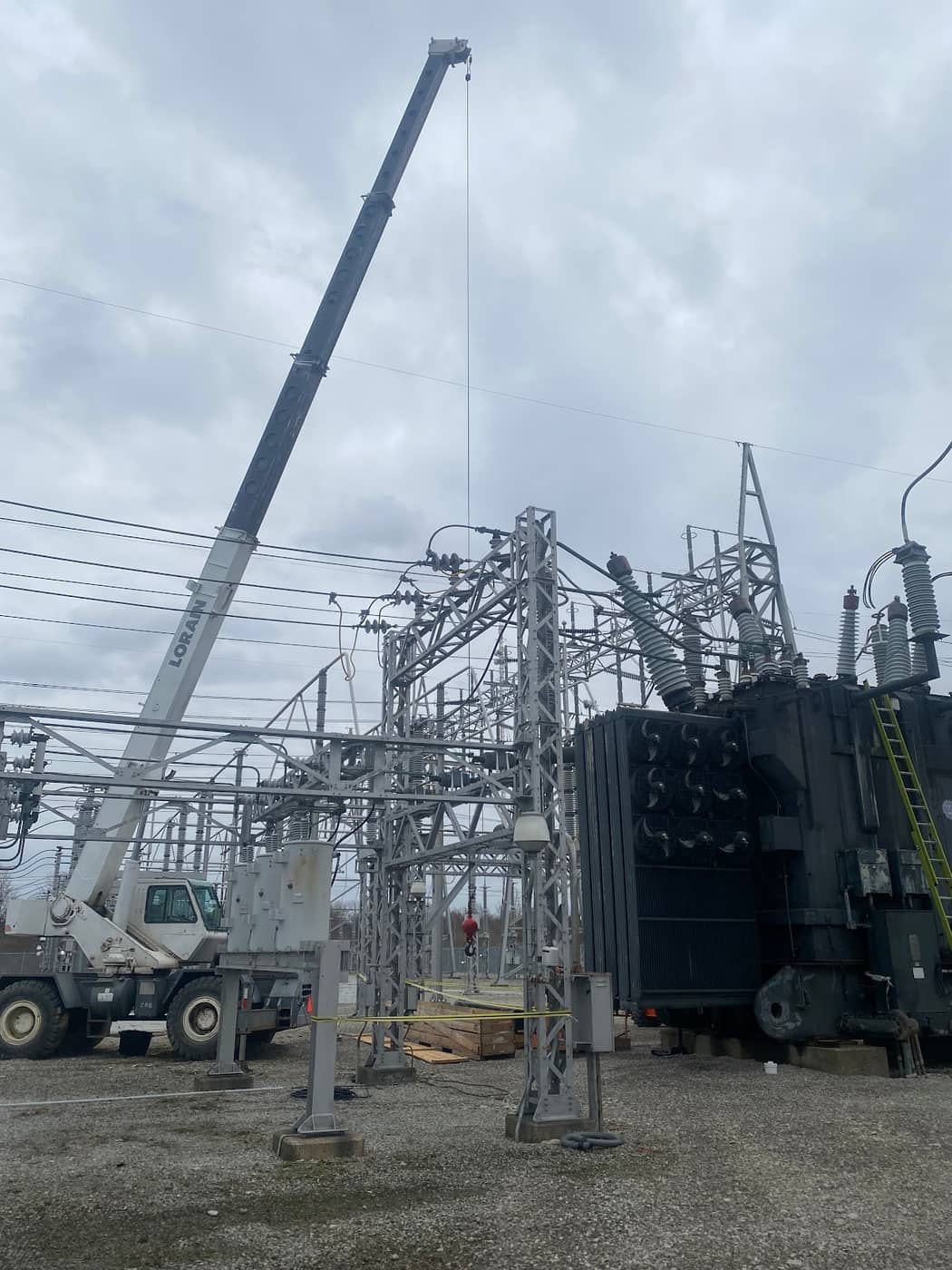
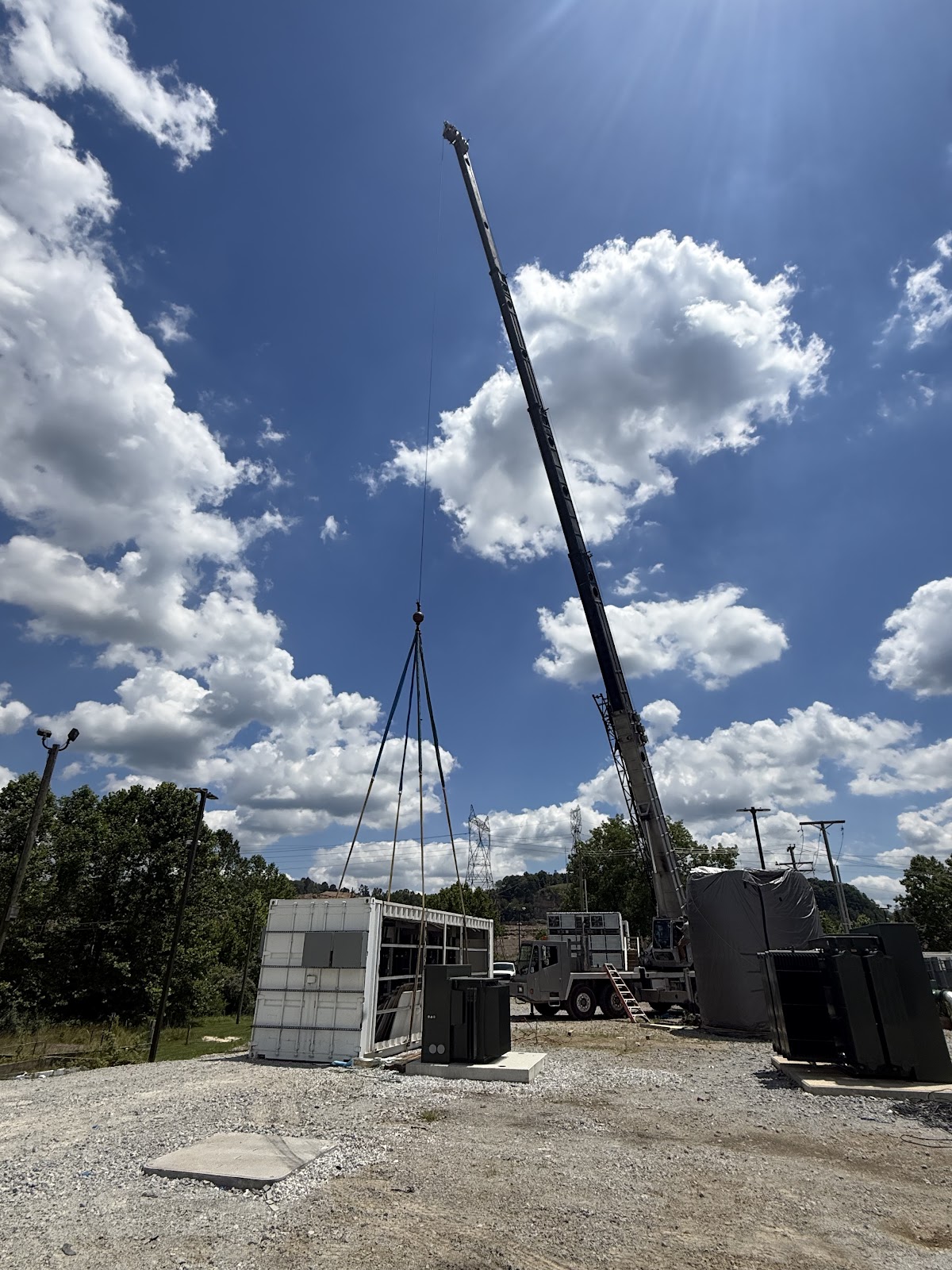
Substation work surrounds the pick with energized equipment, fencing, and overhead conductors. OSHA’s construction crane rule, 29 CFR 1926.1408, sets a 20-foot default clearance from power lines rated up to 350 kV unless the utility de-energizes and grounds them. The lift plan maps every line before the boom moves, and our gallery shows a crane working inside an electrical substation.
Where Rigging Gets Hard in Akron’s Older Industrial Buildings
Akron’s industrial building stock includes plants from the rubber era. One Massillon Road building listed for lease in 2026 dates to 1929 and covers more than 429,000 square feet. Buildings of that age tend to create the same rigging problems.
- Low headroom at the door. Older docks and bay doors limit how high a load can ride, so the rigging has to stay short. A low-headroom lifting beam or short sling legs keep the hook closer to the load.
- Machines with no lift points. Mixers, presses, and extruders pulled from decades-old lines often lack rated lugs. When a frame has no pick points, Canal Crane and Hauling, LLC rigs around it so the load comes up level instead of tipping toward the motor end.
- Floors of unknown capacity. Skating a heavy machine across an old slab means checking the floor and the route before the load moves, not after a crack opens.
- No room off the pavement. Plants on narrow side streets leave little room for outriggers inside the property line, often pushing the crane into the public right-of-way.
- Teardown and refit work. Developers have cleared or refit large blocks of old Goodyear plant space, from the East End redevelopment of the former headquarters campus to the 2024 demolition at the River Street complex. Equipment has to come out before the walls come down.
- Shutdown windows. Many plants schedule line removals around a weekend or a planned outage, so the rigging, crane, and trailer need to arrive ready to work when production stops.
Crane Picks From an Akron Street: Permits and Lane Windows
When a crane, trailer, or barricade has to sit on a city street, the job needs approval from the City of Akron Plans & Permits Center at 1030 E Tallmadge Ave before the first pick. The city’s 2021 right-of-way regulations set these requirements.
| Situation | City requirement | Planning impact |
|---|---|---|
| Crane, trailer, or barricades occupy part of a street or sidewalk | Right-of-Way Occupation Permit at $35 per 100 square feet per month, with a maintenance of traffic plan | Outrigger and mat footprint plus the swing zone |
| Lane closure on an arterial or collector street | No closures from 7 to 9 a.m. or 4 to 6 p.m. on weekdays unless the permit allows it | Setup, pick, and teardown outside the rush windows |
| Full street closure | Allowed only in extreme situations, with a traffic plan to Traffic Engineering at least 7 days ahead and posted notice to each property 72 hours before | Lead time built into the job date |
| Oversize load on city streets | Oversize Load Moving Permit at $75 per load, with route and move time | Delivery timed to the set |
| Any contractor working in the right-of-way | Registration with Plans & Permits and commercial general liability coverage of at least $3 million, with the City named as additional insured | Paperwork filed before the job date |
City inspectors can halt non-emergency work in the right-of-way if the orange permit and stamped drawings aren’t on site. Mention street access during the quote so permit lead time goes into the schedule. When the equipment also has to travel, our Akron heavy hauling team plans the route, permits, and trailer as part of the same quote.
Rigging Through Snow Season and Spring Thaw
Akron-Canton averages nearly four feet of snow per season, based on National Weather Service normals. Winter changes three parts of a rigging job, and the ground under the outriggers matters most.
Frozen ground can feel solid at setup and soften as it thaws, and saturated spring soil carries less load than its surface suggests. Our crew checks ground conditions at the crane setup before the lift plan is final, and mats or cribbing spread the outrigger load where the soil calls for it.
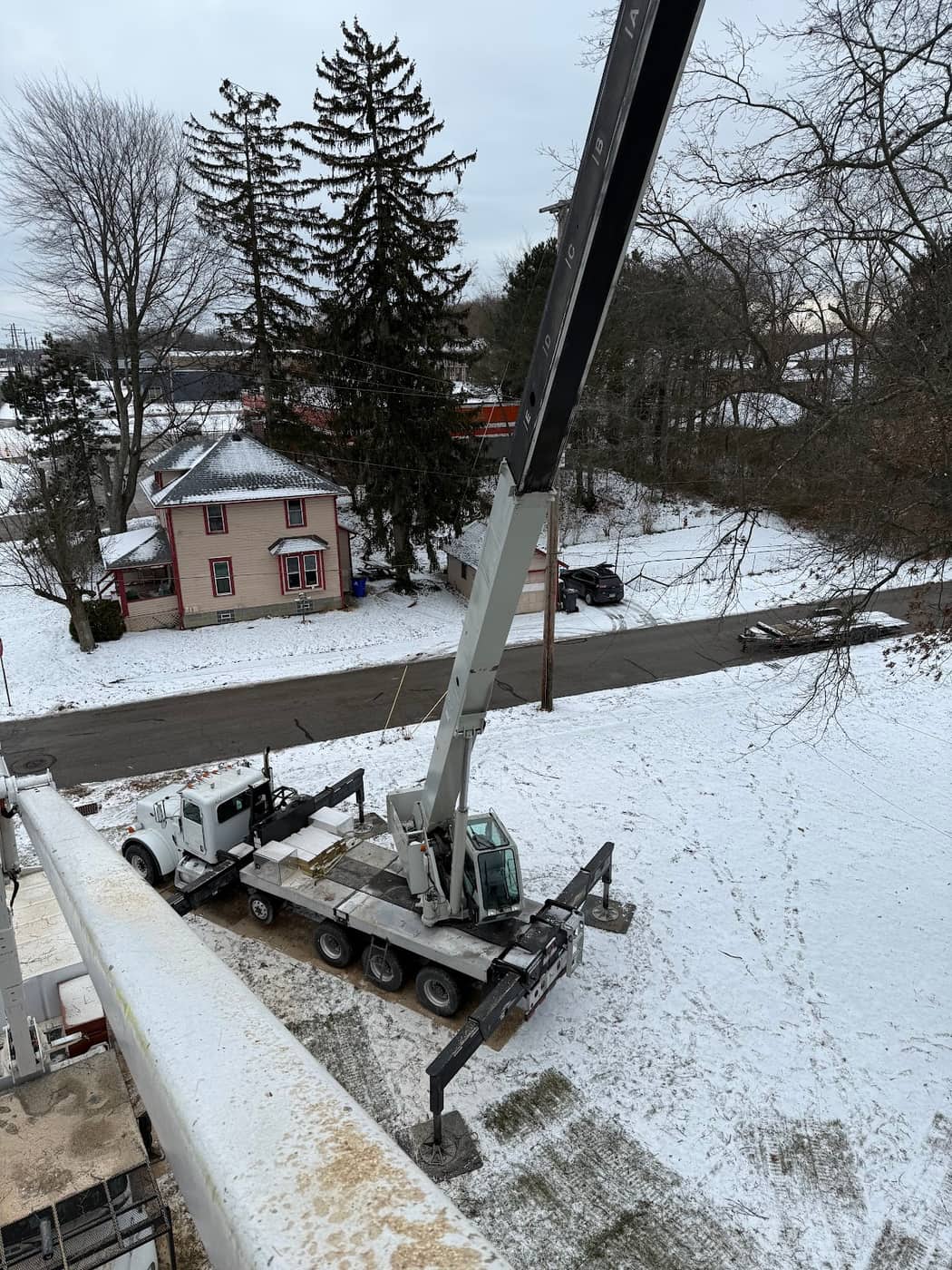
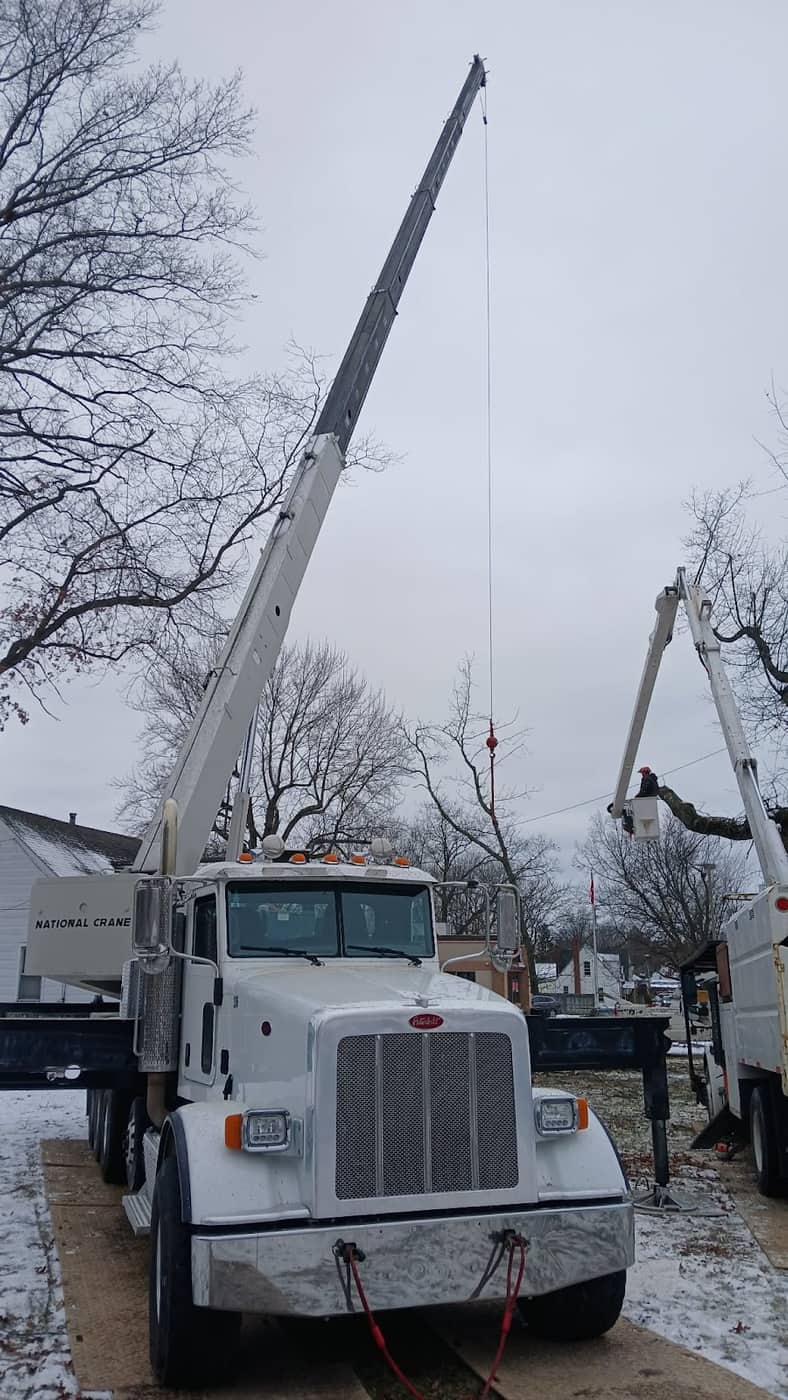
Snow also hides what the plan needs to see: curbs, drains, steel plates, and soft shoulders. Clearing the setup area and the travel path keeps the rigging crew on known ground. Our gallery includes a crane rig deployed in snow and a boom truck on a winter tree removal.
Cold also affects the hardware, so a winter pre-lift inspection should check for ice on wire rope, frozen shackle pins, and stiffened synthetic slings.
Rigging Hardware, Hitches, and Sling Angles
The right hardware depends on the load’s weight, shape, and surface, plus the space around it. Every sling must carry a legible tag showing its rated load, and that rating sets the limit for the plan.
| Hitch | How it holds the load | Effect on capacity |
|---|---|---|
| Vertical | One leg runs straight from the hook to a single attachment point | Full vertical rating |
| Choker | The sling wraps the load and passes back through its own eye | Lower than vertical; check the tag or manufacturer chart for the choker rating |
| Basket | The sling cradles the load with both eyes on the hook | Up to twice the vertical rating with legs vertical, dropping as the legs spread |
| Bridle (2 to 4 legs) | Separate legs run to multiple pick points | Set by sling angle and how evenly the legs share the load |
Sling angle changes the tension in every leg. A two-leg bridle at 45 degrees from horizontal puts about 71 percent of the load on each leg, and that number climbs fast as the angle flattens. A spreader bar or lifting beam keeps the legs closer to vertical on long loads or under low ceilings.
Typical hardware for this work includes wire rope slings, synthetic round and web slings, Grade 80 and Grade 100 alloy chain, screw-pin and bolt-type shackles, shoulder eye bolts, edge protectors, and tag lines. ASME B30.9 covers slings, B30.26 covers rigging hardware, and B30.20 covers below-the-hook devices like spreader bars. OSHA 29 CFR 1926.251 governs rigging equipment on construction sites, and 29 CFR 1910.184 covers slings in general industry settings such as plants.
How an Akron Rigging Job Runs From Quote to Final Set
Our rigging jobs follow six steps.
- Load data. Send the weight, dimensions, center of gravity (if known), and any manufacturer lifting instructions, plus photos of the pick and set points.
- Site review. The crew checks door sizes, ceiling heights, overhead lines, floor condition, ground under the crane, and whether the crane stands on private ground or in the street.
- Lift and rigging plan. Our certified crane operators and rigging crew build both plans together, matching crane capacity, radius, and boom position to the load and checking the numbers against the load chart.
- Permits and scheduling. Street-permit lead time, lane windows, and plant shutdown dates set the job date.
- Inspection and lift. The crew inspects the slings, shackles, and hardware before the lift. The operator then lifts the load, and the crew guides it to its set point, while OSHA rules keep nonessential workers out of the fall zone.
- Securement and transport. When the equipment leaves the building, the same crew secures it for transport under USDOT 4493401, and our heavy hauling services cover longer routes beyond Summit County.
Send the load details first. Weight, footprint, and photos of the pick and set points let us price the rigging, the crane, and any permit time in one quote. Quotes are free, with no obligation.
Why Akron Contractors and Facility Teams Choose Canal Crane and Hauling, LLC
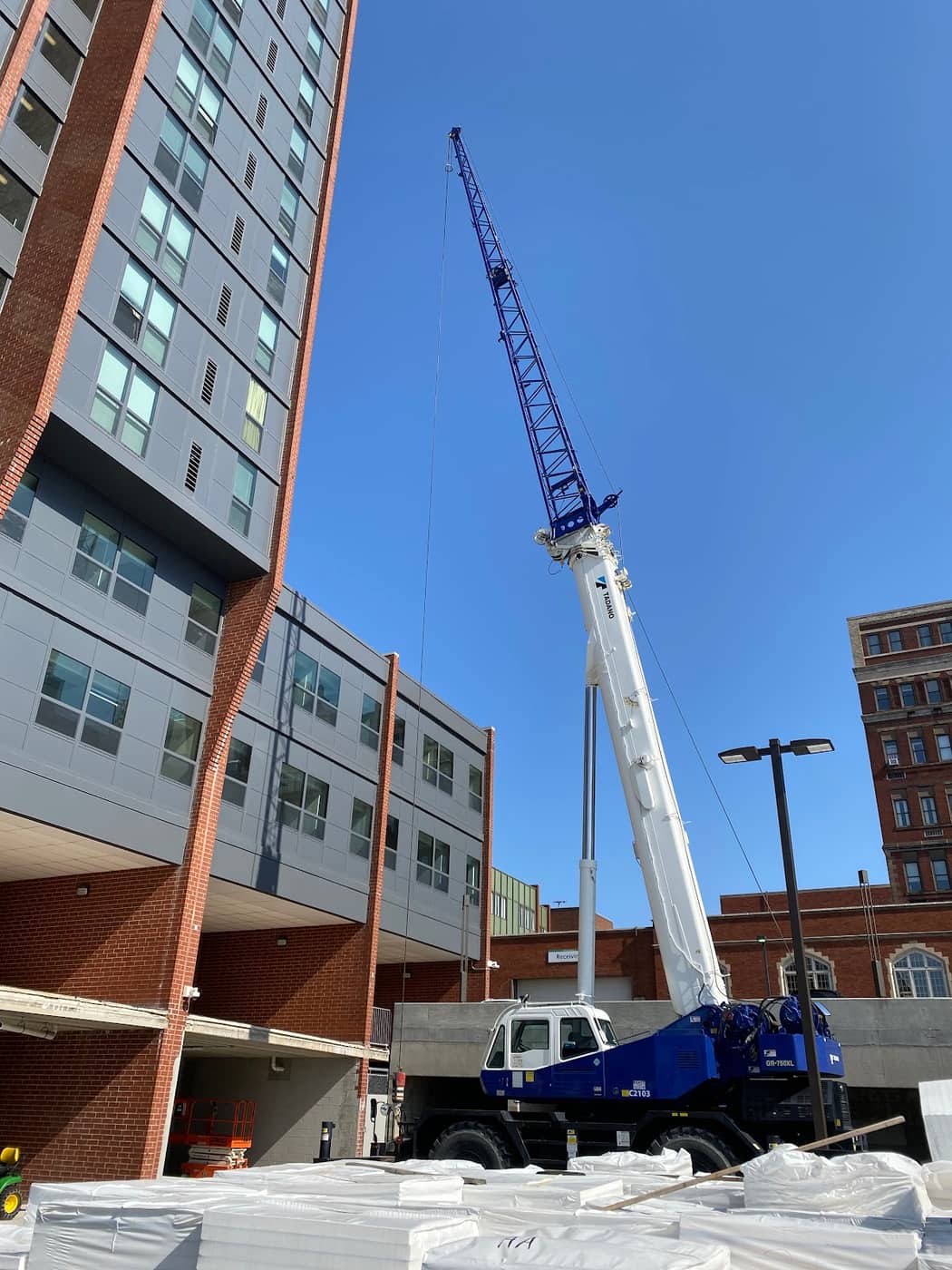
Canal Crane and Hauling, LLC has 15 years of experience across Northeast Ohio. Our project photos include a mobile crane lift on an Akron job site, and our project gallery shows more picks, sets, and hauls from the region.
One Crew for the Lift, the Rigging, and the Haul
Rigging is one of our field services, alongside crane service, heavy hauling, welding, and millwright work. A machine can arrive on our trailer and come off with our crane. Our crew then rigs it into position, and our millwright team aligns it, with no handoff to a second contractor.
Upfront Pricing Built on the Real Scope
We review the load and the site before we quote, so the price reflects the actual job with no hidden costs. These factors drive the cost of a rigging job:
- Load weight and size, which set the crane class and the rigging hardware.
- Crew size and time on site, including any after-hours or shutdown-window work.
- Special hardware, such as spreader bars, lifting beams, or custom bridles.
- Permits and traffic control for picks that use street or sidewalk space.
- Transport distance when the equipment leaves the building on our trailer.
Akron Neighborhoods and Industrial Corridors We Cover
Canal Crane and Hauling, LLC rigs machinery, steel, and tanks across the city and the surrounding Summit County communities. Our yard sits east of the city in Rootstown, so Ellet and the East Akron plants on Kelly Avenue are among the shortest runs.
We cover industrial areas on Massillon Road, in Firestone Park along Firestone Parkway, in Kenmore along West Waterloo Road, and Downtown around Grant Street. We also handle residential and commercial picks in neighborhoods from North Hill and Goodyear Heights to Highland Square and the Merriman Valley.
Past the city line, we rig in Tallmadge, Cuyahoga Falls, Barberton, Mogadore, Brimfield, Uniontown, Hudson, and Silver Lake. Our Akron service area page lists the communities we serve, and a quick call confirms coverage for any site in Northeast Ohio.
Rigging Services FAQs for Akron Job Sites
These answers cover common questions property owners, plant managers, and contractors ask before a rigging job inside the city limits.
Do I need a City of Akron permit if the crane sets up on the street?
In most cases, yes. A crane, trailer, or barricade that occupies part of a city street or sidewalk needs a Right-of-Way Occupation Permit, and the application includes a maintenance of traffic plan. A pick set entirely on private ground falls outside that permit. For a specific site, the Plans & Permits Center at (330) 375-2010 can confirm which permits apply.
Can a crew close a lane on an Akron arterial street during rush hour?
Not without specific permission. Unless the permit says otherwise, city rules bar lane closures on arterial and collector streets from 7 to 9 a.m. and 4 to 6 p.m. on weekdays. The application must also state the exact location and duration of each closure, so plan street-side picks on busy roads for the hours between those windows.
How far is your yard from Akron job sites?
Our yard sits at 4032 Tallmadge Rd in Rootstown, east of the city. West-side sites near Stan Hywet Hall and the Akron Zoo are about 25 minutes away, and east-side neighborhoods such as Ellet and Goodyear Heights sit closer. Call with the job address to confirm timing.
Can you move equipment inside a plant where a crane can’t reach?
Yes. Indoor moves usually rely on forklifts, machinery skates, or jacks instead of a crane boom. Before the move, the crew checks floor capacity, door widths, and the travel path so the machine reaches its foundation without damage to the slab or the equipment.
What counts as a critical lift?
Definitions vary, because OSHA’s construction crane rule does not define the term. Many contractors and site owners treat a pick as critical when it approaches the crane’s chart capacity, uses two cranes, passes over occupied space or near energized lines, or involves a load that cannot be replaced. Critical lifts typically call for a more detailed written plan and a closer review of ground conditions and rigging.
Get a Rigging Quote for Your Akron Job
Book your Akron pick. Tell us what the load is, where it sits now, and where it needs to land. We will review the rigging, match the crane and trailer to the load, and send a clear quote within 24 hours.
Canal Crane and Hauling, LLC
Serving Akron, OH from Rootstown, OH
Address: 4032 Tallmadge Rd, Rootstown, OH 44272
Phone: (330) 227-8107
Hours: Monday to Friday, open 24 hours; Saturday and Sunday, closed