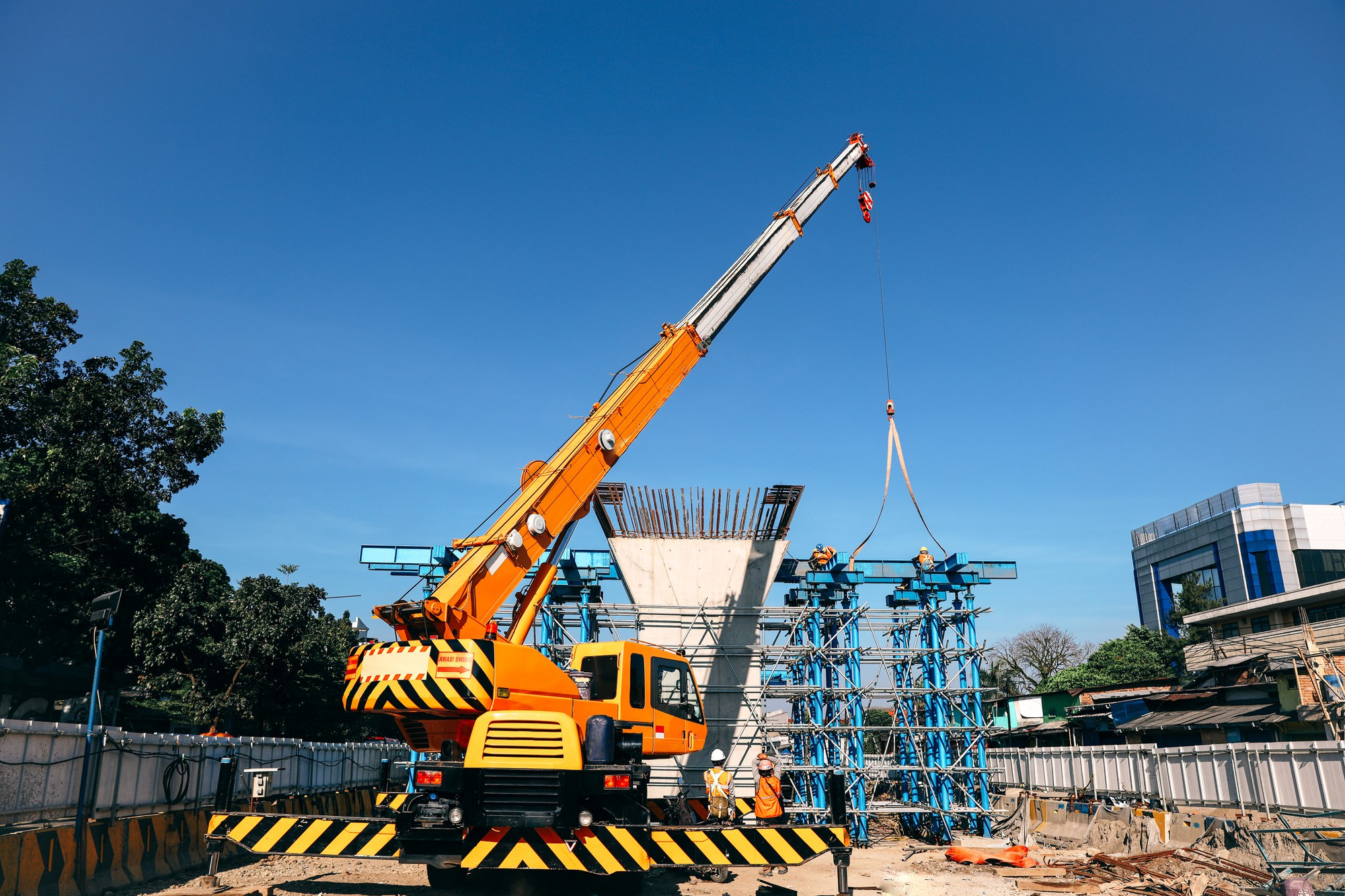
How Do Crane Services Assist Roofing Projects in Akron OH?
Commercial and industrial roofing projects in Akron have a logistics problem that catches a lot of building owners off guard. You plan the timeline, line up the crew, order the materials, and then somewhere in the middle of it all, the question of how to actually get everything up there hits.
It is a bit of a wake-up call, honestly. Getting heavy materials, rooftop units, and bulky equipment to roof level on a large structure is just not something a standard lift can handle.
On most commercial buildings, local crane rentals are the practical answer when you need to move serious weight to a serious height. There is really no way around it. Projects that try to work without one tend to run into delays, safety concerns, and costs that pile up fast, sometimes faster than anyone expects.
The Role a Crane Plays on a Roofing Job
A crane on a roofing project is there to move heavy loads from ground level to roof level. On a commercial building in Akron, that covers a wide range of materials and equipment, including:
- Pallets of roofing materials
- Single-ply membrane rolls
- Rigid insulation board
- Ballast
- HVAC curbs
- Exhaust fans
- Rooftop mechanical units
On large commercial structures such as warehouses, distribution centers, and manufacturing facilities, a forklift or boom lift cannot handle heavy pallet loads at roof height without creating structural and surface risks.
A mobile crane staged at the building perimeter picks those loads cleanly and sets them exactly where the roofing crew needs them, without putting rolling equipment on an elevated surface that was not designed to carry it.
Pre-Job Planning on a Roofing Lift
Before our team stages a crane for a roofing project, the planning phase addresses several factors specific to roof work. Our standard pre-job process consists of three steps:
- Load Analysis – Accounts for the weight and dimensions of every pick, since roofing lifts often involve a sequence of loads across a workday rather than a single large industrial pick. Knowing the full list of what needs to go up and the order of operations shapes how the crane is positioned and how the day is organized.
- Site Walkthrough – Looks at the building perimeter for crane positioning options, identifies overhead utilities along the boom path, evaluates ground conditions for outrigger placement, and maps any access constraints that will affect how the site operates during the lift.
- Hazard Identification – If the building sits in a commercial corridor in Akron with neighboring structures close by, proximity to adjacent properties gets worked into this step.
This process applies the same way to a roofing lift as it does to a large industrial project. The project type changes the specific details. The process does not change.
HVAC Units and Rooftop Equipment Placements
A large portion of crane calls for roofing work in Akron involves rooftop HVAC equipment, whether replacements during a building renovation, new units going in during construction, or supplemental equipment being added to an existing rooftop mechanical system. Commercial rooftop HVAC units arrive on a flatbed, weigh several tons depending on capacity, and require HVAC crane services to get to the roof.
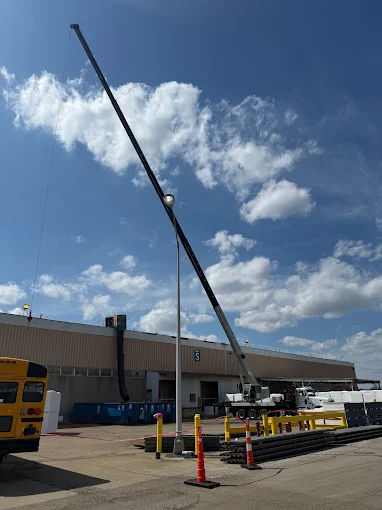
These picks require rigging that accounts for:
- The unit’s weight and dimensions
- Manufacturer-specified attachment points
- Precise positioning on the curb
- Alignment with ductwork connections
- Protection of the roofing membrane around the landing zone
Getting that right is a precision lift, not just a lift. The rigging plan is what makes the difference. We develop and execute the rigging in-house as part of every crane engagement. The crew managing the lift is the same crew that built the rigging plan and confirmed the hardware before the load left the ground.
Coordinating the Crane With the Roofing Schedule
A crane on a roofing project does not operate independently of the rest of the job. It connects to the roofing crew’s work sequence, the material delivery schedule, and, in most cases, the general contractor’s overall project timeline.
If materials arrive at the wrong time relative to when the crane is on site, or if the crane is staged before the rooftop landing zone is clear, the project absorbs idle time that costs money.
Our team communicates the lift schedule as part of the pre-job coordination. For roofing contractors and general contractors in Akron managing a commercial project timeline, knowing exactly when the crane is staged, what it is lifting, and in what sequence keeps the full scope moving without gaps.
When the Roofing Project Involves More Than Placement
Some roofing projects connect directly to structural work at the roof level, including curb fabrication, structural connections for equipment mounts, or framing repairs that run alongside the roofing scope. When that work involves structural welding, we handle it in-house as part of the same project.
On projects where HVAC equipment is being installed and commissioned rather than just set on a curb, millwright work is part of the sequence. The crane picks the unit. The rigging guides it to the curb. The millwright crew handles the mechanical connections, alignment verification, and commissioning to get the equipment running to spec.
When we manage crane operations, rigging, millwright services, and structural welding under one contract, none of those phases require a separate mobilization or a handoff to a crew that was not part of the planning from the start.
Related Topics: