How Do Industrial Maintenance Crane Services Reduce Plant Downtime in Akron, OH?
A stopped production line is never just an inconvenience. Lost output, idle labor, and downstream schedule pressure stack up fast, and the longer a maintenance window runs, the harder those costs become to recover. When crane work is part of that window, the contractor brought in has a direct effect on how quickly the line starts back up.
Getting the hook down is only part of the job. The goal is a lift completed cleanly, inside the planned window, that leaves nothing for the next crew to sort out. Plants that rely on leading crane services in Akron tend to see fewer surprises during turnaround, because the crew already knows how to plan around a live facility instead of working around it.
What Downtime Actually Costs an Akron Manufacturer
The visible cost of a production stop is simple to calculate: hourly output multiplied by hours lost. The harder number is the ripple effect. Idle workers still on the clock, delayed shipments that reach downstream customers, and non-critical maintenance pushed off the schedule entirely are all real consequences once a window runs long.
When the crane contractor causes that extension, the cost belongs to the project. A lift plan that was not finished before the crew arrived, a site clearance issue found only after the crane was already positioned, or millwright work handed to a separate crew that cannot mobilize until the next morning are the three scenarios that most often turn a tight turnaround into a multi-day one.
Where a Crane Shows Up in a Maintenance Window
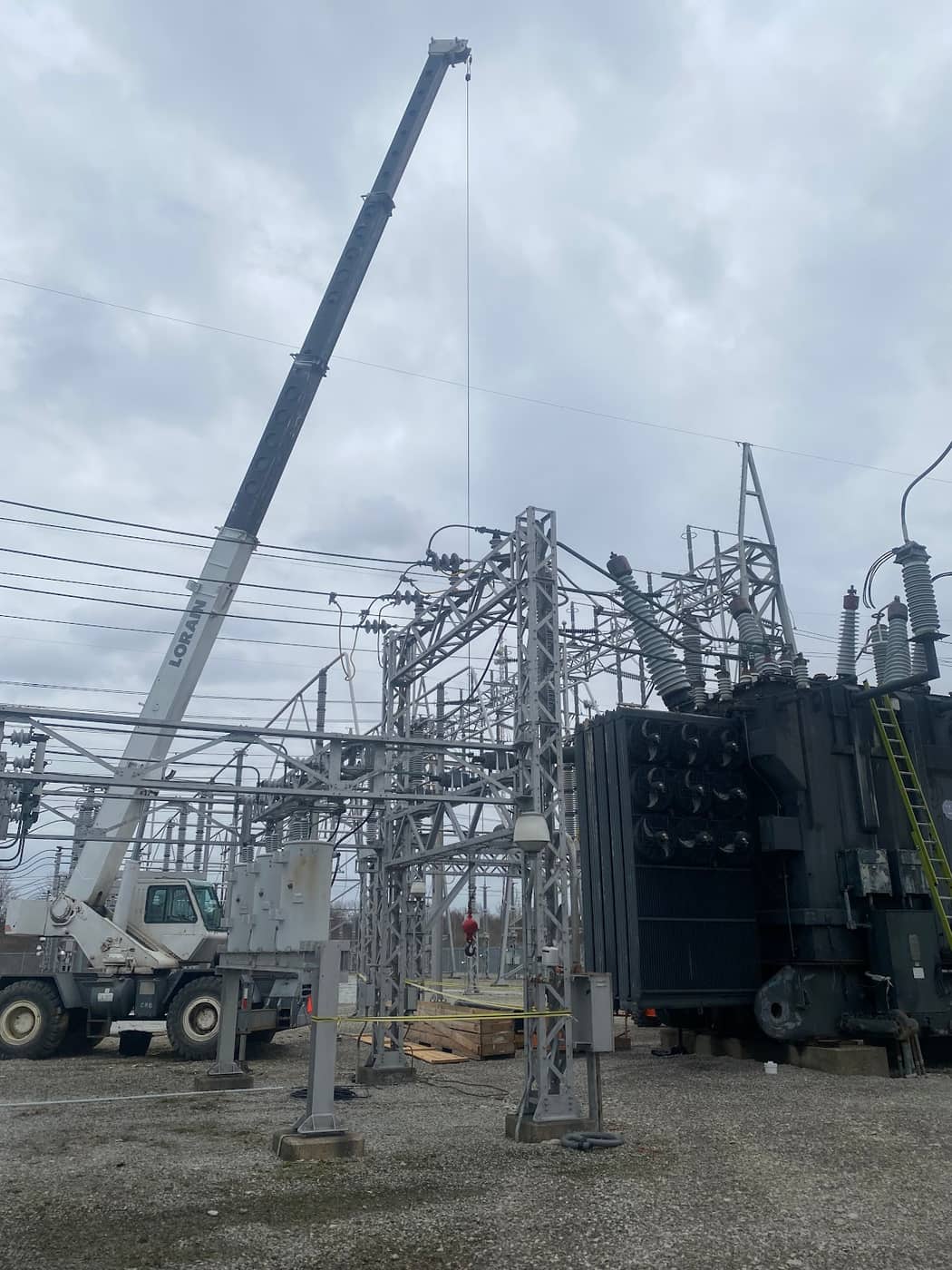
Component removal and reinstallation is the most common application: a heavy part comes out for service and goes back in before the window closes. Press tooling swaps, generator replacements, and gearbox pulls on production equipment all fall into this category, alongside rooftop HVAC swaps, transformer replacements, and cooling tower work.
In every one of those jobs, the lift is one step in a longer sequence. The component gets disconnected, rigged, lifted, set down for service, lifted again, and reinstalled. When a part has to leave the site for that service, our heavy hauling services cover the move to the shop and back so the window doesn’t stretch. Keeping the crane work and the rigging with one crew through that whole sequence is what keeps a job from stalling between contractors.
Not sure how your load fits into that list? Call (330) 227-8107 and walk through the specifics with our crew before anything gets scheduled.
The Three Steps That Cut the Risk of a Delay
Before a lift begins on a maintenance project, our team works through three steps. None of them are a formality:
- Load analysis: confirmed weight, dimensions, and rigging attachment requirements for the component, established before the crane is staged
- Site walkthrough: access routes, overhead clearances, and crane positioning options evaluated before the maintenance window opens
- Hazard identification: electrical lines, structural concerns, and personnel zones documented and addressed ahead of time
Done thoroughly, those three steps push the odds of a mid-lift surprise close to zero. On a maintenance job, where the clock is the tightest constraint on the whole project, that is what keeps the window intact.
Why One Crew Beats Three Contractors on a Maintenance Window
Plant managers who have coordinated a separate crane contractor, rigging crew, and millwright firm on the same maintenance project already know the overhead that creates. One crew finishes and leaves. The next cannot mobilize until the following morning. The gap between the lift and the reinstallation stretches from hours to days, and the line stays down the whole time, which is one reason why operator experience matters on crane projects that call for coordinating multiple trades under one roof.
The handoff itself, not any single contractor’s skill, is usually where the extra time comes from:
| Where Time Gets Lost | What a Single Crew Removes |
|---|---|
| Waiting on a second contractor to mobilize | The same crew that lifts the component also handles the reinstallation, so there is no wait for a new crew to show up |
| A site issue found after the crane is staged | The site walkthrough happens before the crane is dispatched, not after |
| An incomplete lift plan discovered mid-job | Load analysis and hazard identification are finished before the maintenance window opens |
| Millwright work stalled after the crane leaves | Crane, rigging, and millwright installation run under one contract and one schedule |
Our crew handles crane operations, rigging, flatbed hauling, millwright installation, and structural welding in-house. One schedule, one point of contact, and one call if something needs to change mid-project. That single-vendor structure is what we built specifically for maintenance windows, where the cost of a handoff is measured in downtime, not just dollars.
“The handoff between contractors is where a maintenance window turns into a multi-day one.”
Scheduled Turnarounds vs. 2 a.m. Emergency Calls
Planned maintenance is the easier case. Lead time allows for a full site visit, a detailed lift plan, and confirmed equipment staging well before the first day of the window, so the crew arrives ready to work without a startup delay.
Emergency calls are different, but the same process applies. We operate 24 hours a day, seven days a week, and when a component fails overnight and needs to come out before the day shift arrives, the load analysis, site check, and hazard review still happen. They just happen faster, because the crew runs this process often enough to move through it under time pressure without skipping a step. A facility with a recurring maintenance schedule benefits from having us assess the site in advance, since that groundwork is part of how crane services support infrastructure projects on tight turnarounds, and it’s what makes an emergency response faster when the call actually comes.
What to Have Ready When You Call
The more detail you can provide upfront, the faster we can put a realistic timeline and quote in front of you: load weight and dimensions, pick and set locations, any access constraints on-site, and whether the project includes millwright alignment or structural welding after the lift.
If you do not have all of that yet, that is not a problem. A site walkthrough is part of our standard process before any quote goes out, so we gather what is missing in person rather than asking you to guess at it over the phone.
Frequently Asked Questions About Industrial Maintenance Crane Services in Akron, OH
What qualifies as a maintenance lift?
Any crane lift performed as part of a maintenance operation, including component removal and reinstallation, planned-shutdown equipment swaps, rooftop mechanical replacements, and emergency pulls after an unexpected failure. If the load needs a crane to move safely, it qualifies.
Do you respond to emergency maintenance calls after hours?
Yes. We operate 24 hours a day, seven days a week. If an unplanned situation comes up overnight or on a weekend, our team assesses what is needed and dispatches accordingly.
Can the same crew handle the lift and the millwright reinstallation?
Yes. Crane operations, rigging, and millwright installation run in-house under one contract, so the crew that removes the component during maintenance is the same crew that reinstalls and aligns it when it returns from service.
How far in advance should a maintenance lift be scheduled?
As early as your schedule allows. Several weeks of notice gives our team time for a full site walkthrough and a detailed lift plan. For emergencies, we are available 24/7 and respond as quickly as the situation allows.
Do you serve manufacturing facilities across Northeast Ohio?
Yes. We serve the Northeast Ohio industrial corridor from our base in Rootstown, Ohio, including Akron, Canton, Youngstown, and the surrounding area.
Get a Site Assessment for Your Akron Project
Call our team with your load weight, dimensions, and maintenance window, and we will walk your site and coordinate the full lift plan before any equipment is staged.
Phone:(330) 227-8107
Based in: Rootstown, OH
Service area: Akron and Northeast Ohio
Hours: Open 24 hours, 7 days a week