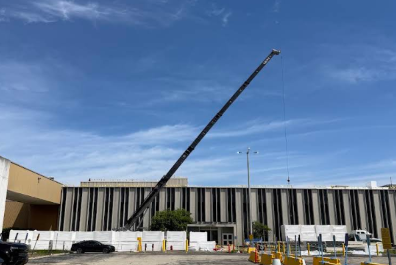
How Much Do Crane Services Cost in Akron, OH?
Crane service pricing in Akron comes down to four variables: load weight and dimensions, how much working room the site gives the crane, how long the equipment and crew stay on site, and whether the lift needs rigging, flatbed hauling, millwright or welding work around it. Two jobs lifting identical loads can quote differently because the sites differ.
We have completed more than 100 crane engagements out of our Rootstown yard over 15 years, and we price every one of them the same way. We assess, then we quote. Before a plant manager sees a figure, we need to know the weight, the ground conditions, and the access route, so a walkthrough from licensed crane services in Akron comes before any phone estimate.
What Actually Moves the Number on an Akron Crane Job
A crane quote is assembled from four cost centers: the machine sized to the load, the certified operator and support crew running it, the hours that machine and crew spend on your site, and the mobilization to get both there and back. Load weight sets the floor because it determines which crane can legally make the pick. Everything above that floor is site-driven.
Working radius is where buyers are most often surprised. A crane rated far above your load sheds capacity quickly as the boom extends, so a 10,000-pound lift at 30 feet and the same 10,000-pound lift at 90 feet are not the same job and will not carry the same price. Distance from the crane’s set-up position to the final landing point can push a job up a crane class on its own. Our crew checks that radius during the walkthrough, before anything gets quoted, because discovering it on lift day means a second mobilization and a second invoice.
Why Site Access Changes the Price More Than Load Weight
Akron’s manufacturing stock was built across decades when nobody was planning for a modern mobile crane in the yard. Narrow drives, low canopies, utility lines over the approach, loading docks that assumed smaller equipment. Every one of those constraints either adds time or forces a larger machine into the job.
Ground bearing is the other access factor that carries real cost. Outriggers concentrate enormous pressure into a small footprint, and soft fill, buried utilities, or an aging slab will not take it without matting. Mats add staging time, and sometimes an extra truck. Plants in Akron, Canton, and Massillon that have never had a crane on that particular pad before are exactly where this comes up, and it is cheaper to identify during a site walkthrough than to discover with a crane already on location.
What a Day on Site Actually Covers
Buyers comparing quotes often assume an hourly crane rate covers the pick and nothing else. The hours on the invoice cover a longer sequence than the lift itself, and understanding that sequence makes competing quotes easier to read against each other.
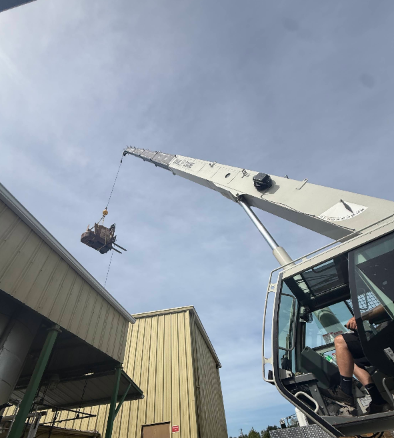
A typical crane day on an industrial job in Northeast Ohio includes:
- Travel from our Rootstown yard and positioning on the set-up point
- Outrigger deployment, matting where ground conditions call for it, and leveling
- Rigging the load, verifying attachment points, and a test lift before the full pick
- The lift, the swing, and controlled placement at the landing point
- Teardown, site cleanup, and the return haul
Compressing that sequence is where a crew that has run the plan beforehand saves a client money. Our operators arrive having already reviewed the lift, so the first hour on site is work rather than assessment.
Not sure what your crane job will actually cost? Give us a call at (330) 227-8107, and we’ll schedule a site walkthrough so the figure you budget around is built on your weight, access, and ground conditions.
Call (330) 227-8107Where Bundled Scope Lowers the Total Project Cost
The crane line item is rarely the whole bill on an industrial project. Equipment arrives on a trailer, somebody has to rig it, somebody has to set and align it, and somebody has to weld the mounts. Priced as four separate contracts, each of those carries its own mobilization and its own markup, and the flatbed hauling of heavy equipment into the plant is usually quoted by a company that never speaks to the crane crew.
We run crane operations, rigging, flatbed hauling, millwright work, and structural welding in-house, under one contract, with one crew. That changes the arithmetic. One mobilization instead of four. One schedule instead of four calendars that have to be aligned. No remobilization charge when the machine lands an inch and a half off the anchor bolt pattern, because the crew that set it is the same crew that corrects it. For a plant in Warren or Youngstown taking delivery of a press, combining the crane pick with the transport and the installation under a single scope usually prices below the sum of the separate quotes.
What We Need From You Before We Can Quote
The fastest route to a firm number is arriving with the load data already in hand. Weight and dimensions, the pick point and the set point, overhead and access constraints, and your project timeline will get a useful conversation started on the first call.
From there, our pre-job process runs the same way on every engagement regardless of size: load analysis, site walkthrough, hazard identification. Load analysis confirms weight, center of gravity, and attachment points. The walkthrough establishes access, overhead clearance, and ground capacity. Hazard identification documents what has to be addressed before equipment stages. That sequence is standard procedure for us, and it is also what the quote is built on, which is covered in more depth in our breakdown of the planning sequence behind every lift. A quote issued without it is a guess, and guesses get corrected on site at the client’s expense.
Frequently Asked Questions
These are the questions plant managers and general contractors in Summit County put to us most often before a first lift. The answers reflect how we actually price and run crane work rather than how the category describes itself.
We can give you a useful range on a phone call once we have load weight, dimensions, and the distance from set-up to landing point. A firm number follows the site walkthrough. We do not issue binding figures on assumed site conditions because that is how quotes change after mobilization.
Yes. Our crane work is delivered operated, with certified operators and support crew included in the engagement. We do not rent bare equipment for a customer to staff themselves.
Access constraints discovered on lift day, ground that will not take outrigger loading without matting, a working radius longer than assumed, and scope that turns out to need rigging or installation work nobody quoted. All four are identified during the pre-job walkthrough.
Shorter jobs cost less in crew and machine hours, though mobilization to and from our Rootstown yard applies either way. Short picks close to our base price more efficiently than short picks at a distance.
Rigging is part of the scope we deliver in-house rather than a subcontracted line item. Pricing reflects the full work being performed, without a second company’s markup layered on top.
As early as the production schedule allows. Lifts that need rigging plan development, permit coordination, or multi-service sequencing benefit most from lead time, and booking early protects your maintenance window.
Contact Canal Crane and Hauling
Submit a request at canalcrane.com, and we will schedule a site walkthrough at your facility. We answer around the clock, open 24 hours a day, 7 days a week, because production windows do not keep business hours.
Planning a lift in Akron or nearby? Our crew is ready to walk your site, answer your questions, and help you build a safe, well timed plan for your next project.
- Phone: (330) 227-8107
- Address: 4032 Tallmadge Rd, Rootstown, OH 44272
- Website:https://canalcrane.com/
Canal Crane and Hauling, LLC serves Akron, Canton, Youngstown, Warren, Massillon, and the surrounding Northeast Ohio industrial corridor from our base in Rootstown, Ohio.
Related Topics: